Change Bank Details Student Finance . Some california golf courses face drought restrictions. Use your student finance account to: from venturebeat.com You change your term time living location; 98 liverpool road, formby, l37 6bs registered no. Changes to your course and living arrangements could affect what types of funding you can get and.
Instantaneous Rate Of Change For E. The instantaneous rate of change is the derivative. One way to measure changes is by looking at endpoints of a given interval.
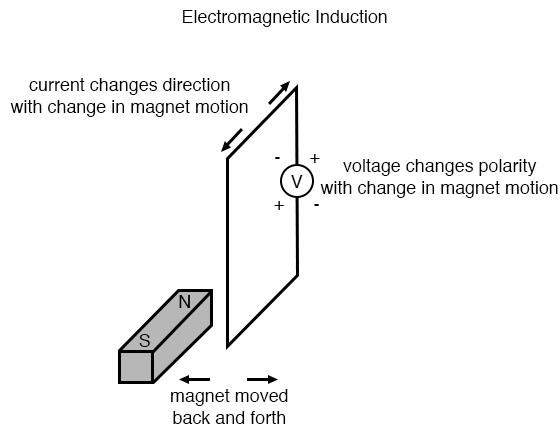
14.5 Induction from www.technocrazed.com
Using x = a in the above formula we have: • first of all, just enter the function or equation in the respective input filed. The instantaneous rate of change is the derivative of our function (which is the rate of change) evaluated at the specific point (at x=2).
So, The Instantaneous Rate Of Change When X=0 Is F ′ ( 0 ) = E 0 = 1
Rate of change of the graph in that interval. F ′ (2) = 4 e 2 + 2 e 2 = 6 e 2 = 44.334 This is the slope of the line tangent to y = f(x) at.
Instantaneous Rate Of Change Is The Rate Of Change At Any Particular Point On The Curve.
• if this limit exists, we call it the derivative of f at x = a. What is the instantaneous rate of change when the time is 6.5 secs? You can select negative or.
This Is The Value Of The Derivative At A Particular Point.
The value of the instantaneous rate of change is also equal to the slope of the tangent. The slope of the secant line represents the average. The instantaneous rate of change is the derivative.
Velocity Is Used To Describe The Rate Of Change Of Position By An Object In Respect To Time.
This function is unchanging for any value of x, therefore its rate of change is zero. This corresponds to a fundamental property of fluid flow called vorticity that, using eq. One of the two primary concepts of calculus involves calculating the rate of change of.
So, The Instantaneous Rate Of Change When X=0 Is F'(0)=E^0=1
Students of physics may recall that the height (in feet) of the riders, t t seconds. In this graph, you can see how the blue function can have its instantaneous rate of change represented by a red line tangent to the curve. It is analogous to the slope of the tangent line at a point, as well.


Comments
Post a Comment